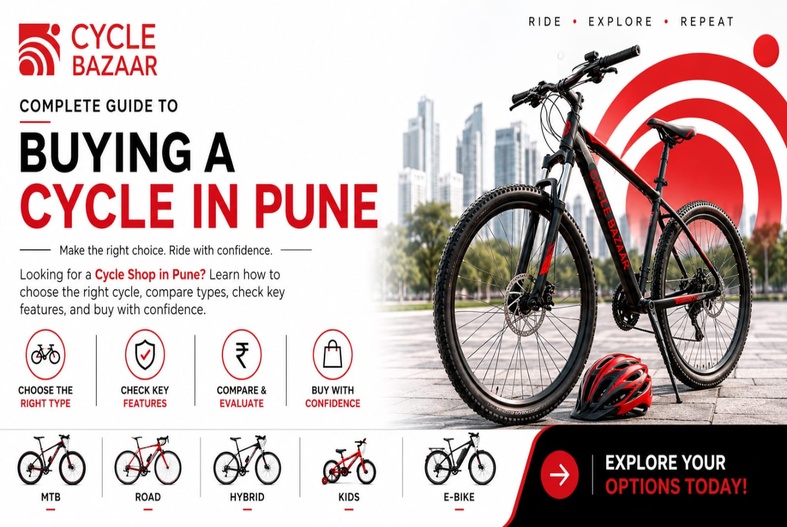
Complete Guide to Buying a Cycle in Pune: What You Need to Know
Buying a cycle sounds simple until you start comparing different models, sizes, gears, brakes, tyres, and prices. With so many options available, it’s easy to choose a cycle that looks great but doesn’t actually suit the way you ride.
If you’re searching for a Cycle Shop in Pune, the first step is to understand what you need from your cycle. A daily commuter has different requirements from someone who rides on weekends, while a cyclist planning hill rides needs something different again.
This guide covers the key things to consider before buying a cycle in Pune, from choosing the right type and frame size to checking components and setting a sensible budget.
1. Decide How You’ll Use Your Cycle
Before looking at brands or prices, think about where and how often you’ll ride.
Ask yourself:
- Will you use it for daily commuting?
- Are you planning weekend rides?
- Do you want to ride on roads, trails, or both?
- Will you ride mostly on flat roads or hilly routes?
- Do you want a fitness-focused cycle?
- Are you buying for a child, teenager, or adult?
Your answers will narrow down your choices considerably.
For example, someone commuting through Pune traffic may prefer a practical hybrid or city cycle. A rider who enjoys rougher terrain may be better suited to a mountain bike.
2. Choose the Right Type of Cycle
Different cycle types are designed for different riding conditions.
| Cycle Type | Best For | Key Benefit |
|---|---|---|
| Mountain Bike | Trails and rough roads | Strong frame and wider tyres |
| Hybrid Bike | Commuting and fitness | Comfortable and versatile |
| Road Bike | Speed and long road rides | Lightweight and efficient |
| City Bike | Everyday urban riding | Simple and comfortable |
| Kids’ Cycle | Children | Easy handling and suitable sizing |
You don’t necessarily need the most expensive option. The best cycle is the one that matches your regular riding conditions.
Mountain Bikes
Mountain bikes are suitable for uneven roads, trails, and riders who want a more rugged setup. Wider tyres provide better grip, while suspension can make rough surfaces more comfortable.
Hybrid Bikes
A hybrid is a practical choice if you want one cycle for commuting, fitness rides, and occasional longer trips. It offers a balance between comfort and efficiency.
Road bikes are built for speed and smoother roads. They’re worth considering if you plan to cover longer distances and want a faster riding experience.
City Bikes
City cycles focus on comfort and easy everyday riding. They’re a good option for short commutes, errands, and relaxed rides.
3. Get the Correct Frame Size
Frame size is one of the most important things to check before buying.
A cycle that is too large can feel difficult to control. A frame that’s too small may leave you uncomfortable, particularly during longer rides.
Your height is a useful starting point, but it’s not the only factor. Leg length, riding position, and the specific frame design also matter.
Whenever possible, sit on the cycle and check:
- Can you comfortably reach the handlebars?
- Can you place your feet safely when stopping?
- Does the riding position feel natural?
- Can you turn the handlebars without feeling cramped?
- Is there enough clearance when standing over the frame?
If you’re unsure, ask the staff at a local cycle shop to help you find the appropriate size.>
4. Understand the Gear System
More gears don’t automatically mean a better cycle.
A cycle with several gears gives you more options for managing different riding conditions. This can be particularly useful if your routes include climbs or varied terrain.
For everyday Pune riding, think about the roads you’ll actually use rather than choosing a cycle based only on the number of gears.
Check:
- Number of gears
- Shifting mechanism
- Ease of changing gears
- Condition and quality of the drivetrain
- Availability of replacement components
For beginners, a simple and reliable gear setup can sometimes be a better choice than a complicated system.
5. Check the Brakes
Brakes deserve close attention because they directly affect control and safety.
Common options include rim brakes and disc brakes.
Rim brakes are generally simple to maintain and can work well for everyday riding.
Disc brakes provide strong stopping performance and are available in mechanical and hydraulic versions. They’re especially useful when you ride frequently in challenging conditions.
Don’t choose brakes solely because one type sounds more advanced. Consider your riding style, maintenance needs, and budget.
6. Look Carefully at the Tyres
Tyres affect comfort, grip, rolling resistance, and handling.
Wider tyres generally offer more stability and can feel more comfortable on uneven surfaces. Narrower tyres can be suitable for riders focused on speed and smoother roads.
Before buying, check the tyre size and tread pattern. Think about the roads you’ll ride on most often.
If your typical route includes broken patches, uneven surfaces, or occasional gravel, a tyre with suitable width and grip can make a noticeable difference.
7. Set a Realistic Budget
Cycling doesn’t have to mean buying the most expensive cycle available.
Instead, divide your budget according to what matters most for your riding.
Consider the total cost, including:
- Cycle
- Helmet
- Lights
- Lock
- Mudguards
- Bottle and bottle cage
- Basic repair tools
- Regular maintenance
A good-quality cycle that fits properly is usually a better investment than a cheaper model that doesn’t suit your needs.
At the same time, avoid paying for features you won’t use. If you’re only planning short city rides, you may not need components designed for advanced trail riding or competitive cycling.
8. Take a Test Ride Before Buying
A short test ride can tell you things that specifications can’t.
Pay attention to how the cycle feels when you:
- Start moving.
- Change gears.
- Apply the brakes.
- Turn.
- Stand and pedal.
- Ride over a slightly uneven surface.
Check whether your shoulders, wrists, back, and legs feel comfortable.
If something feels awkward during a short test ride, don’t assume you’ll automatically get used to it. The right cycle should feel manageable and comfortable once it’s properly adjusted.
9. Buy From a Cycle Shop You Can Trust
Choosing where you buy your cycle matters almost as much as choosing the cycle itself.
A good Cycle Shop in Pune should be able to help you compare models based on your riding needs, explain the differences between components, and help with sizing and setup.
After-sales support is another important consideration. Ask about servicing, warranty coverage, spare parts, and basic adjustments.
Buying from a shop that can support you after the purchase can save you time and unnecessary expense later.
10. Don’t Forget Regular Maintenance
Even a good cycle needs routine care.
Before every ride, quickly check the tyres, brakes, and chain. Keep the drivetrain clean and lubricated, and get the cycle professionally serviced when necessary.
Simple Cycle Maintenance Checklist
- Check tyre pressure
- Test both brakes
- Inspect the chain
- Check for loose components
- Clean the cycle regularly
- Lubricate the chain when required
- Inspect tyres for excessive wear
- Get professional servicing when needed
Regular maintenance can improve the riding experience and help extend the life of your cycle.
How Much Should You Spend on a Cycle?
There’s no single correct price for everyone.
Your budget should depend on how frequently you ride, where you ride, and which features you actually need.
A beginner looking for short city rides can focus on comfort, fit, reliability, and easy maintenance. Someone planning frequent long-distance rides may want to spend more on weight, drivetrain quality, braking performance, and overall components.
The key is to compare cycles within your intended use rather than comparing prices alone.
Common Mistakes to Avoid When Buying a Cycle
Choosing Based Only on Appearance
A stylish frame won’t make an unsuitable cycle comfortable. Prioritise fit and intended use.
Buying the Wrong Size
Even a high-quality cycle can feel uncomfortable if the frame isn’t right for you.
Focusing Only on Gear Count
More gears aren’t always necessary. Look at the quality and range of the gearing instead.
Ignoring Maintenance
Ask about servicing and replacement parts before making your purchase.
Skipping the Test Ride
A test ride is one of the easiest ways to identify comfort or handling issues before you buy.
Final Thoughts
Buying the right cycle is less about finding the most expensive model and more about finding one that fits your body, budget, and riding plans.
Start by deciding how you’ll use the cycle. Then compare the type, frame size, gears, brakes, tyres, comfort, and maintenance requirements. Take a test ride before making your decision, and don’t hesitate to ask questions.
If you’re looking for a Cycle Shop in Pune, explore the options available at Cycle Bazaar and choose a cycle that fits the way you actually ride.
FAQs About Buying a Cycle in Pune
Which cycle is best for beginners in Pune?
A hybrid or city cycle can be a practical starting point for many beginners because it’s suitable for everyday roads, commuting, and fitness riding.
How do I choose the right cycle size?
Use your height as a starting point, then check the manufacturer’s size chart and test the cycle for reach, leg clearance, and overall comfort.
Is a mountain bike good for city riding?
It can be used for city riding, especially on rough roads, but it may be heavier and less efficient than a hybrid or city cycle for regular urban commuting.
Should I buy a cycle with more gears?
Not necessarily. Choose a gear range that matches your routes and riding style instead of choosing based only on the number of gears.
Where should I buy a cycle in Pune?
Look for a cycle shop that offers suitable models, proper sizing assistance, test rides, reliable servicing, and after-sales support.